Why An African History Month

Why, An African History Month?

The motherland's histories are complex with over 2000 cultures, constituting, different languages, traditions and customs and they all have their own stories to tell. It would be mutually beneficial to have our history to be accessible in one historical umbrella. Each month would address a different topic. This will plant the seeds of knowledge to be harvest for the future generations. Most importantly, "African History Month" would serve as a catalyst to correct the gross misconceptions, omission and distortions of it's history.of African people globally.

The word African specifically relates to the indigenous people of the African continent and their descents in the Diaspora ( Caribbean , Americas , Arabia , etc). The race-nationality model such as that currently employed by African-American, African-Brazilian and African-Caribbean communities more accurately describes the identity whilst fully articulating the history and geopolitical reality

The miscellaneous usage of the label 'Black' within this site reflects its contemporary use as a means to denote a specific
sociocultural and political context. It is recognized as a colloquial term that was fashioned as a reactionary concept to derogatory racial epithets in the 1960's. It is offensive when used as a racial classification code word to denote African people. Other such denigrating terminology when made in reference to African culture, heritage or identity are 'Tribe', 'Sub-Saharan Africa', or 'black Africa '.

READ MORE


Tuesday, July 26, 2016

Afro-Brazilian History, Beats and Culture

For most people the idea of Black History month is relegated to the African-American experience in the United States. While Africa and America are often recognized as the book ends of the African Diaspora, there is an additional link in the Middle Passage that is less publicized, but no less important. The central link in the Middle Passage is Brazil. Today Brazil has the largest population of Black origin outside of Africa, estimated at 90 million people. Read More

Thursday, July 21, 2016

The Sacred Spirits of African Slaves: Kochi’s Unique History

A dark past, unkown to most, haunts many parts of Kochi. Centuries after African slaves were brought to these shores by the Portuguese, many stories and beliefs have evolved about them. Several parts of Kochi are dotted with remnants of slavery. Although it is unclear how these slaves came to be called kappiri, it is believed that the word might have its roots in the term “kaffir”.
Read More

Wednesday, July 13, 2016

The Arab slave trade: 200 million non-Muslim slaves from all colors and nationalities

About ten years ago while traveling in Asia I found a very unusual book which I have unfortunately not been able to find in the West. I was casually reading it in the bookstore and regret that I never purchased it due to space and weight restrictions I already had in my luggage. It was a 900-year old Muslim ‘slave manual’ translated into English from the original Arabic. It was basically a very detailed purchasing manual, describing the cultural and ethnic traits of slaves from different parts of the world in non-Islamic countries.

Read More

Wednesday, July 6, 2016

South Africa Parliament approves Land Exprorpiration bill

What does the Fourth Industrial Revolution mean to you? Do you fear robots or self-driving cars taking your job, or do you embrace the blockchain, 3D-Printing or any other fast-developing technology as an opportunity to create a business, leapfrog the competition or build a fairer, more equal society?

Read More

Wednesday, June 29, 2016

Fidel Castro And The Cuban Role In Defeating Apartheid

Until the fall of the Portuguese dictatorship in 1974, apartheid in South Africa was secure. There was no substantial resistance anywhere in southern Africa. Pretoria’s neighbors comprised a buffer zone that protected the racist regime: Namibia, their immediate neighbor which they had occupied for 60 years; white-ruled Rhodesia; and the Portuguese-ruled colonies of Angola and Mozambique. The rebels who fought against minority rule in each of these countries, operating without any safe haven to organize and train, were powerless to challenge the status quo.

Read More

Wednesday, June 8, 2016

Nubia and the Powerful Kingdom of Kush
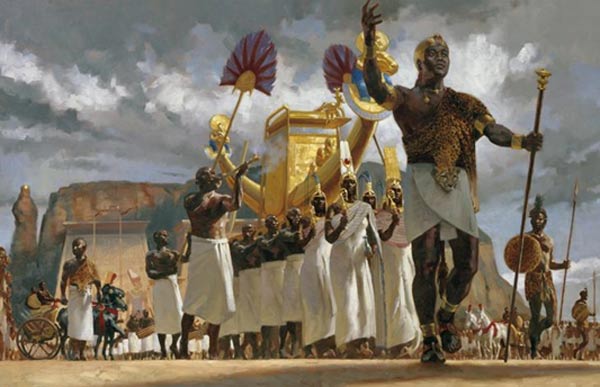
Pharaonic Egypt is arguably the most famous ancient civilization on the African continent. This does not mean, however, that it was the only ancient civilization that sprang from African soil. Egypt’s southern neighbors, the Nubians (Egyptian for ‘gold’, due to the abundance of this precious metal in their lands), have had an uneasy relationship with the Egyptians over the millennia. At times, they were seen as allies of the Egyptians, while at other times they were seen as the wretched enemies. Under the Kingdom of Kush, however, the Nubians would conquer Egypt and establish a dynasty of their own.

Read More

Tuesday, May 31, 2016

New York Maafa (slave) Rebellion of 1712

In the early 1700s, New York had one of the largest enslaved populations of any of England’s invaded territories. One out of every five New York residents was enslaved. The Maafa (slavery) in New York differed from some of the other territories because there were no large plantations. Many enslaved Africans were skilled workers, carpenters, stone masons, fishermen, and boat builders. These Atlantians (enslaved Blacks) lived and worked next to free and indentured whytes and some intermarried when they got their freedom.

Read More