The ink hasn’t yet dried on Trump’s victory and we’re already hearing about how his campaign promises are being “modified,” i.e. reneged on. Trump’s infamous wall along the border with Mexico is already becoming more virtual than real, with admissions that Mexico will not pay for it. Trump himself has suggested he favors certain features of Obamacare (no denial of coverage based on preexisting conditions, and coverage extended to “children” until the age of 26), so there’ll be no wholesale “repeal and replace,” as he promised.
Read More
Why An African History Month
Why, An African History Month?
The motherland's histories are complex with over 2000 cultures, constituting, different languages, traditions and customs and they all have their own stories to tell. It would be mutually beneficial to have our history to be accessible in one historical umbrella. Each month would address a different topic. This will plant the seeds of knowledge to be harvest for the future generations. Most importantly, "African History Month" would serve as a catalyst to correct the gross misconceptions, omission and distortions of it's history.of African people globally.The word African specifically relates to the indigenous people of the African continent and their descents in the Diaspora ( Caribbean , Americas , Arabia , etc). The race-nationality model such as that currently employed by African-American, African-Brazilian and African-Caribbean communities more accurately describes the identity whilst fully articulating the history and geopolitical reality
The miscellaneous usage of the label 'Black' within this site reflects its contemporary use as a means to denote a specific
sociocultural and political context. It is recognized as a colloquial term that was fashioned as a reactionary concept to derogatory racial epithets in the 1960's. It is offensive when used as a racial classification code word to denote African people. Other such denigrating terminology when made in reference to African culture, heritage or identity are 'Tribe', 'Sub-Saharan Africa', or 'black Africa '.
READ MORE
sociocultural and political context. It is recognized as a colloquial term that was fashioned as a reactionary concept to derogatory racial epithets in the 1960's. It is offensive when used as a racial classification code word to denote African people. Other such denigrating terminology when made in reference to African culture, heritage or identity are 'Tribe', 'Sub-Saharan Africa', or 'black Africa '.
READ MORE
Thursday, December 29, 2016
Thursday, December 22, 2016
The Battle For Just Peace In A World of War Lies
Author Catherine Shakdam writes in “The Sound Of Your Silence”:“Today silence has become more than a war crime. Today silence has become more than just the manifestation of our egocentrism and selfishness. Today silence has enabled, empowered and shielded oppressors and tyrants.”In From Mecca To The Plain of Karbala Walking with the Holy household of the Prophet the Imam recites Farwa ibn Musayk Muradi:“If we have been victorious today it is not something new, because we have always gained victory and even if we are defeated, predominance and victory is ours; and truth is victorious in all circumstances, whether it wins or loses.”
Thursday, December 15, 2016
The Battle For Just Peace In A World of War Lies
“Today silence has become more than a war crime. Today silence has become more than just the manifestation of our egocentrism and selfishness. Today silence has enabled, empowered and shielded oppressors and tyrants.”In From Mecca To The Plain of Karbala Walking with the Holy household of the Prophet the Imam recites Farwa ibn Musayk Muradi: “If we have been victorious today it is not something new, because we have always gained victory and even if we are defeated, predominance and victory is ours; and truth is victorious in all circumstances, whether it wins or loses.”
Read More
Read More
Thursday, December 8, 2016
Fidel Castro;s Defied the Odds
Despite enormous difficulties arising from a US economic blockade, Cuba under Castro made tremendous strides forward in education, medicine, science, sport, international exchange relations and sustainable development. The Cuban revolution served as a promising source of hope not only to the impoverished people of Latin America but also to the rest of the Tricontinental World - the exploited and colonized populations of Latin America, Asia and Africa.
Read More
Read More
Thursday, November 10, 2016
NATO and the Contradictions within Western Imperialism
The headline decision taken at the summit was the stationing of a four battalion multinational force rotating between Poland and the Baltic states. This was agreed two years ago at the NATO summit in Wales but it has taken two years for NATO members to cobble together 4,000 troops, whose main task it is to deter a Russian aggression in the region.
Read More
Thursday, November 3, 2016
The 13 Illuminati Families That Run The World Today
As the powerful elite continue their plan for total control over humanity and the planet’s limited resources, a family of 13 Illuminati bloodlines continues to secretly pull the strings behind the scenes. The masses remain ignorant of the fact that these shadowy forces behind the New World Order agenda are set to wreak havoc and destruction across the planet in the next few years.
Read More
Wednesday, September 28, 2016
The challenges of being Black and upper class in Brazil
Monica Valeria Goncalves, 47, has two university degrees. She works as a legal adviser in Brasilia and is married to a judge.She frequents expensive restaurants and exclusive social events, and lives in one of the Brazilian capital's most privileged neighbou rhoods.In short, her life is very similar to that of the rest of her social class - the top 1% of Brazilian society.The only difference is that she is black. That makes her part of the majority of the Brazilian population - 53% are black or mixed-race according to the latest census - but in a minority among the upper class.
Read More
Read More
Wednesday, September 21, 2016
With Creation of an All African Passport, A Push Toward All African Unity
The African Union is set to launch a common electronic passport that would grant visa-free travel to all of its 54 member-states, a move that hits at the organization’s long-running goal of more closely linking nations from across the continent.The passport will first be issued to heads of state and senior officials at the AU’s summit in Kigali, Rwanda, later this month, with the Union saying it aims to provide passports to all African citizens by 2020.
Read More
Read More
Wednesday, September 14, 2016
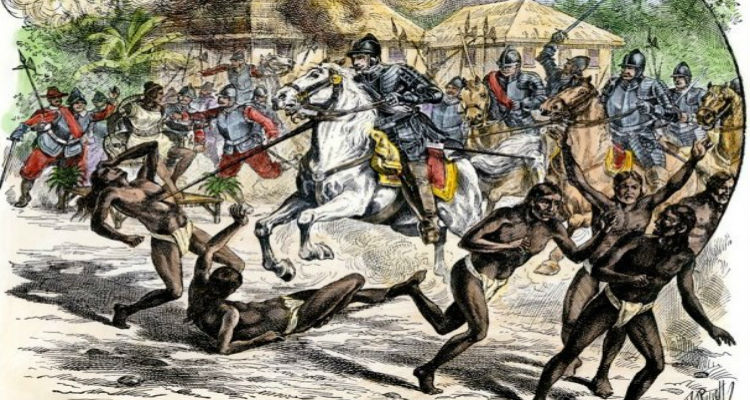
Slave Resistances In Latin America
There are a number of challenges facing historians and scholars who are interested in understanding slave resistances in Latin America.[1] Scholars have generally not given a great deal of inquiry into the various forms of resistance against slavery in the Western Hemisphere, except for a few prominent scholars[2] who acknowledge that incidents of slave revolts, rebellions, resistances and plots, were more numerous in Latin and Central American countries than in the U.S.[3] It has almost become commonplace for scholars to use the large number of slave revolts in the Americas as a yardstick for assessing slave’s personality, as a factor in their ability to response to their enslavement..
Read More
Read More
Wednesday, September 7, 2016
The Bahia Muslim Slave Revolt
For most people the idea of Black History month is relegated to the African-American experience in the United States. While Africa and America are often recognized as the book ends of the African Diaspora, there is an additional link in the Middle Passage that is less publicized, but no less important. The central link in the Middle Passage is Brazil. Today Brazil has the largest population of Black origin outside of Africa, estimated at 90 million people.
Read More
Wednesday, August 24, 2016
Marcus Garvey's Legacy
He had a background in printing and published his first newspaper, The Watchman, in 1909. He left Jamaica in 1910 for Central America, settling first in the coastal town of Limon, Costa Rica, where he published a small newspaper. He would also spend time in Honduras and Belize. Garvey in 1911, went on to edit the newspaper, La Nacionale in Colon, Panama, before returning to Jamaica briefly in 1912, he again left in 1913 when he moved to England and worked with the enigmatic Sudanese-Egyptian nationalist Duse Mohamed Ali, in London, on the staff of Ali"s influential pan-African journal, The African Times and Orient Review. Read More
Tuesday, July 26, 2016
Afro-Brazilian History, Beats and Culture
For most people the idea of Black History month is relegated to the African-American experience in the United States. While Africa and America are often recognized as the book ends of the African Diaspora, there is an additional link in the Middle Passage that is less publicized, but no less important. The central link in the Middle Passage is Brazil. Today Brazil has the largest population of Black origin outside of Africa, estimated at 90 million people. Read More
Thursday, July 21, 2016
The Sacred Spirits of African Slaves: Kochi’s Unique History
A dark past, unkown to most, haunts many parts of Kochi. Centuries after African slaves were brought to these shores by the Portuguese, many stories and beliefs have evolved about them. Several parts of Kochi are dotted with remnants of slavery. Although it is unclear how these slaves came to be called kappiri, it is believed that the word might have its roots in the term “kaffir”.
Read More
Read More
Wednesday, July 13, 2016
The Arab slave trade: 200 million non-Muslim slaves from all colors and nationalities
About ten years ago while traveling in Asia I found a very unusual book which I have unfortunately not been able to find in the West. I was casually reading it in the bookstore and regret that I never purchased it due to space and weight restrictions I already had in my luggage. It was a 900-year old Muslim ‘slave manual’ translated into English from the original Arabic. It was basically a very detailed purchasing manual, describing the cultural and ethnic traits of slaves from different parts of the world in non-Islamic countries.
Read More
Read More
Wednesday, July 6, 2016
South Africa Parliament approves Land Exprorpiration bill
What does the Fourth Industrial Revolution mean to you? Do you fear robots or self-driving cars taking your job, or do you embrace the blockchain, 3D-Printing or any other fast-developing technology as an opportunity to create a business, leapfrog the competition or build a fairer, more equal society?
Read More
Read More
Wednesday, June 29, 2016
Fidel Castro And The Cuban Role In Defeating Apartheid
Until the fall of the Portuguese dictatorship in 1974, apartheid in South Africa was secure. There was no substantial resistance anywhere in southern Africa. Pretoria’s neighbors comprised a buffer zone that protected the racist regime: Namibia, their immediate neighbor which they had occupied for 60 years; white-ruled Rhodesia; and the Portuguese-ruled colonies of Angola and Mozambique. The rebels who fought against minority rule in each of these countries, operating without any safe haven to organize and train, were powerless to challenge the status quo.
Read More
Read More
Wednesday, June 8, 2016
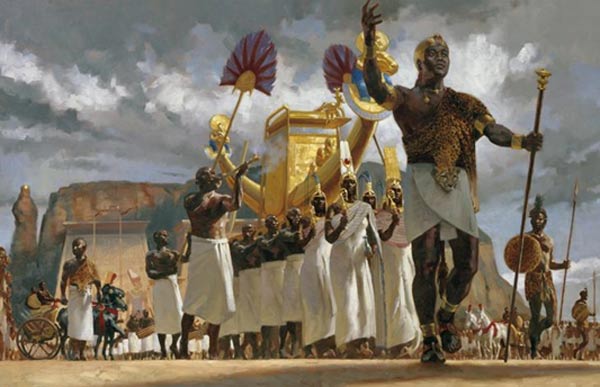
Nubia and the Powerful Kingdom of Kush
Pharaonic Egypt is arguably the most famous ancient civilization on the African continent. This does not mean, however, that it was the only ancient civilization that sprang from African soil. Egypt’s southern neighbors, the Nubians (Egyptian for ‘gold’, due to the abundance of this precious metal in their lands), have had an uneasy relationship with the Egyptians over the millennia. At times, they were seen as allies of the Egyptians, while at other times they were seen as the wretched enemies. Under the Kingdom of Kush, however, the Nubians would conquer Egypt and establish a dynasty of their own.
Read More
Read More
Tuesday, May 31, 2016
New York Maafa (slave) Rebellion of 1712
In the early 1700s, New York had one of the largest enslaved populations of any of England’s invaded territories. One out of every five New York residents was enslaved. The Maafa (slavery) in New York differed from some of the other territories because there were no large plantations. Many enslaved Africans were skilled workers, carpenters, stone masons, fishermen, and boat builders. These Atlantians (enslaved Blacks) lived and worked next to free and indentured whytes and some intermarried when they got their freedom.
Read More
Read More
Monday, May 23, 2016
Little Africa
Africa need to work together to get its rightful place in the world involving pertinent bodies including the private sector. Thus, Tana Forum would serve as an instrument to achieve set goals. Prime Minister Hailemariam Dessalegn said that Africans should come up with African solutions to problems through collecting and analyzing knowledge as well as strengthening local institutions.
Read More
Read More
Friday, May 6, 2016
The father of European domination
1. Columbus Day was established by an ivy, male-only Catholic organization known as the Knights of Columbus. They wanted a male Catholic role model they could look up to, so they pressured President F.D. Roosevelt into making it a federal holiday in 1937.2. Columbus never set foot on the land that would become the United States of America. In fact, he never saw it.3. His four voyages took him to the Caribbean, “a small detour to Central America and a hop to the northeast coast of Venezuela.” He had no idea the continent of North America existed. He thought he had found China, Japan and the region of King Solomon’s fabled gold mines.
Read More
Subscribe to:
Posts (Atom)