African History is world history, moreover; our history is every day. Henceforth, a monthly presentation will be presented featuring different elements of our heritage. African Memorial Month is featured in May to feature our neglected and forgotten Heroes in the western hemisphere. In the US, we’re familiar with Marcus Garvey, Malcolm X and Dr King and in Africa, Patrice Lumumba, Julius Nyerere, Kwame Nkrumah and Haille Selesse I was household names. However, we must acquaint ourselves with the Latin American heroes such as: the enslaved African-Mexican Gasper Yanga and Abdias do Nascimento, a Brazilian writer, painter, politician and scholar who was an outspoken civil rights leader on behalf of African Brazilians, has died in Rio de Janeiro.
Read More
Friday, April 29, 2016
Sunday, April 24, 2016
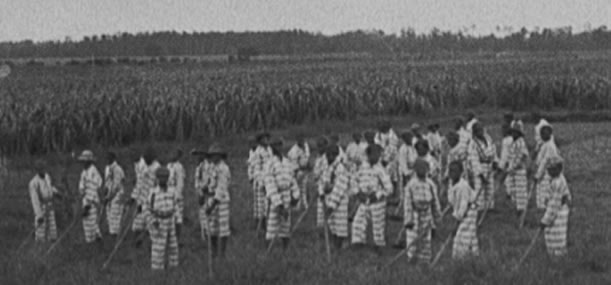
Slavery By Another Name
Slavery: . . . that slow Poison, which is daily contaminating the Minds & Morals of our People. Every Gentlemen here is born a petty Tyrant. Practiced in Acts of Despotism & Cruelty, we become callous to the Dictates of Humanity, & all the finer feelings of the Soul. Taught to regard a part of our own Species in the most abject & contemptible Degree below us, we lose that Idea of the dignity of Man which the Hand of Nature had implanted in us, for great & useful purposes.
Read More
Read More
Friday, April 15, 2016
History's Lost Black Towns
Fort Mose, Fla.: The First 'Emancipation Proclamation'
Founded in 1738, Fort Mose, located just north of St. Augustine, is the United States' first free black settlement. Amid the fight for control of the New World, Great Britain, Spain and other European nations relied on African slave labor. The king of Spain issued an edict: Any male slave of the British colonies who escaped to the Spanish colony of Florida would be set free -- as long as he declared his allegiance to Spain and the Catholic Church. The settlement was abandoned when the British took possession of Florida in 1763.
Captions by Monée Fields-White
Courtesy of Black Past
Read More
Founded in 1738, Fort Mose, located just north of St. Augustine, is the United States' first free black settlement. Amid the fight for control of the New World, Great Britain, Spain and other European nations relied on African slave labor. The king of Spain issued an edict: Any male slave of the British colonies who escaped to the Spanish colony of Florida would be set free -- as long as he declared his allegiance to Spain and the Catholic Church. The settlement was abandoned when the British took possession of Florida in 1763.
Captions by Monée Fields-White
Courtesy of Black Past
Read More
Friday, April 8, 2016
The Color and Flavor of Afro-Cuban Life: A Look at How Black Cubans Have Struggled Over the Years with Racial Identity and Culture
HAVANA – Afro-Cubans have contributed greatly to the culture of Cuba with Havana having the highest concentration of Afro-Cubans in the country. However, there is great controversy about how many people of African descent there are in Cuba—some say 20 percent, while others say upwards of 65 percent. Many people of mixed race describe themselves as mulatto or mestizo, people of combined European and Latin/African backgrounds.
Although some don’t identify with the Afro-Cuban label, preferring to identify through nationality as Cubans more than by race, Blacks in Cuba struggle with racial issues and identity in much the same way as the rest of the world, with historical inequalities carrying over to modern times.
The first group of Afro-Cubans are the descendants of enslaved Africans brought from West Africa. In recent years, the country has also seen an increase of Black immigrants from Jamaica and Haiti, adding to the African flavor of the island.
Read More
Although some don’t identify with the Afro-Cuban label, preferring to identify through nationality as Cubans more than by race, Blacks in Cuba struggle with racial issues and identity in much the same way as the rest of the world, with historical inequalities carrying over to modern times.
The first group of Afro-Cubans are the descendants of enslaved Africans brought from West Africa. In recent years, the country has also seen an increase of Black immigrants from Jamaica and Haiti, adding to the African flavor of the island.
Read More